
How Much Should You Water Your Lawn During a Wilmington, NC Drought?
Posted: June 23, 2026
Bowman’s Best Blogs
How Much Should You Water Your Lawn During a Wilmington, NC Drought?
Wilmington Lawns Are Feeling the Heat
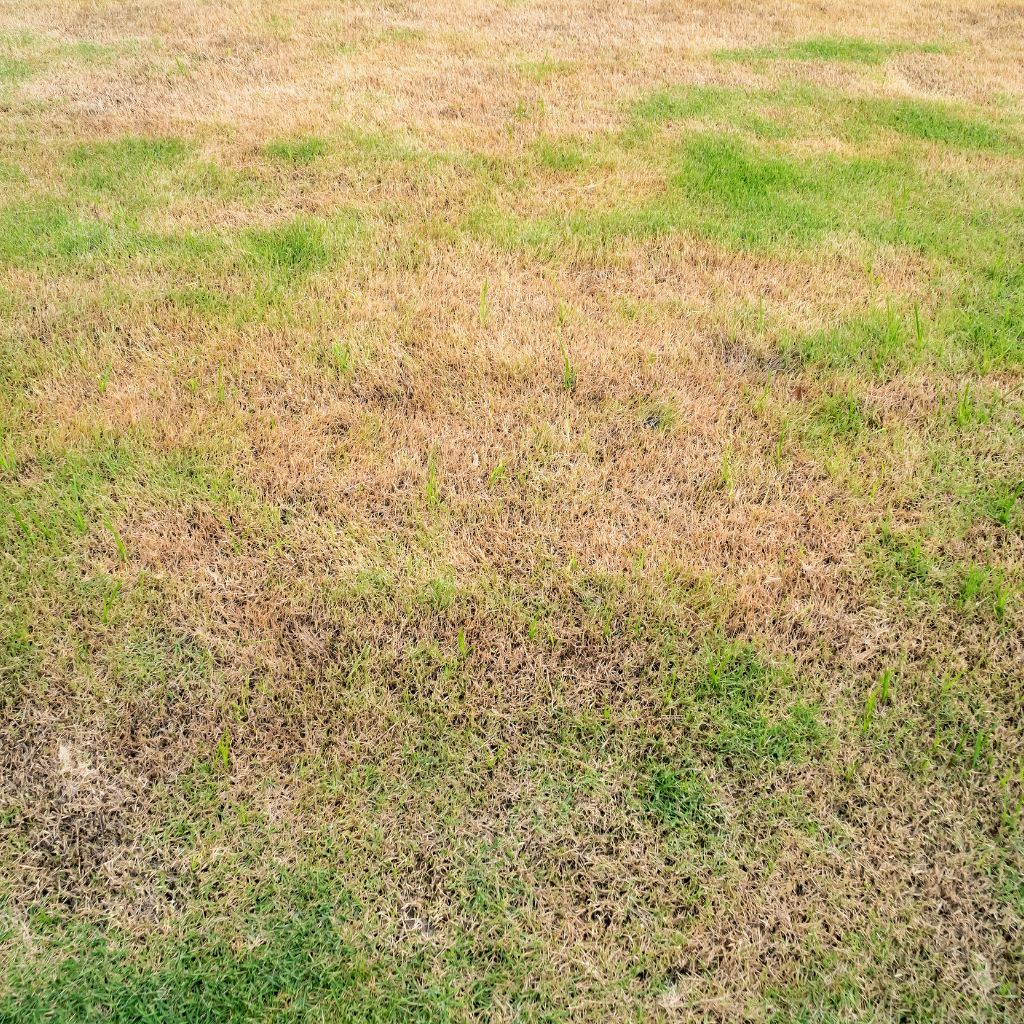
If your Wilmington lawn looks brown, brittle, or patchy during this dry spell, you are not alone. Coastal North Carolina lawns can show drought stress quickly when high heat, low rainfall, and sandy soils work together.
The good news is that brown grass does not always mean dead grass. Many warm-season lawns can go dormant during dry conditions to protect themselves. The key is knowing when your lawn needs water, when it may simply be resting, and when another issue could be causing the damage.
At Bowman Best Lawn Care, we help homeowners understand what their lawn is telling them and how to protect it without wasting water.
How Much Should You Water Your Lawn?
As a general rule, warm season turfgrass needs about 1 inch of water per week from rainfall or irrigation to stay green and actively growing.
That does not mean your lawn needs water every day. A better approach is to water deeply 1–2 times per week, depending on rainfall, soil type, grass type, and drought severity. Daily shallow watering can encourage weak, shallow roots, making the lawn less prepared for heat and dry weather.
A simple way to measure your watering is the “tuna can test.” Place a few small, straight-sided cans or rain gauges around the lawn while the sprinkler runs. Once the cans collect about 1 inch of water, you have a rough idea of how long that sprinkler zone needs to run.
If your lawn is dormant, the goal may not be keeping it green. The goal may simply be to help the turf survive until rainfall improves.
Check Local Watering Rules First
Watering guidance can change quickly during drought conditions. Before setting your irrigation schedule, check with your local water provider.
Cape Fear Public Utility Authority, or CFPUA, serves Wilmington, Wrightsville Beach, and New Hanover County. Homeowners using municipal water should check CFPUA or their own provider for current restrictions, conservation requests, or watering schedules.
This is especially important for properties with irrigation systems, newly installed sod, large lawn areas, or homes using municipal water.
Morning Watering Wins
The best time to water your lawn is usually early morning or during the late-night to early-morning window. Watering during this time helps reduce evaporation and gives moisture a better chance to reach the soil.
Avoid watering during the hottest part of the afternoon when heat and sun can waste much of the water. It is also wise to avoid keeping turf constantly wet, especially in Wilmington’s humid climate where prolonged moisture can contribute to lawn disease concerns.
The goal is simple: water when the lawn can absorb the moisture, not when the sun and heat will steal most of it.
Signs Your Lawn Needs Water
Drought stress often shows up before the lawn turns fully brown. One of the easiest signs to watch for is footprints that remain visible after you walk across the grass.
Other signs may include:
However, not every brown patch is caused by drought. Lawn disease, insects, weeds, compacted soil, mower stress, or irrigation problems can all create similar-looking damage. That is why a professional lawn evaluation can be helpful before assuming water is the only answer.
Water Smarter, Not Harder
During a drought, more water is not always the solution. Smarter watering is the goal.
A few practical tips for Wilmington homeowners:
A properly designed irrigation system can also make a major difference. Instead of guessing with sprinklers, irrigation can help apply water more evenly across the lawn. Bowman Best Lawn Care offers new irrigation system installs, along with lawn care services such as mowing maintenance, weed control, fertilization, pest control, aeration, sod installation, and landscape installation.
Protect Your Lawn Without Wasting Water
During a Wilmington drought, your lawn may not look perfect, and that is okay. Brown or dull turf can sometimes be a natural response to heat and dry conditions.
What matters most is knowing how to respond. For a green, actively growing lawn, about 1 inch of water per week from rain or irrigation is a common recommendation. For drought survival, less water may be enough to help protect the turf until rainfall improves.
The biggest mistake homeowners can make is guessing. Dry spots, brown patches, and thinning areas may be caused by drought, but they can also point to deeper lawn health problems.
Let Bowman Best Lawn Care Take a Look
Concerned about dry spots, brown patches, or drought damage? Give Bowman Best Lawn Care a call for a free estimate. We will help you understand what your lawn needs and create a plan to help it bounce back.
910-264-5034
Related Posts
LAWN CARE
Landscape Installation
HArdscapes & Lighting


